Introduction
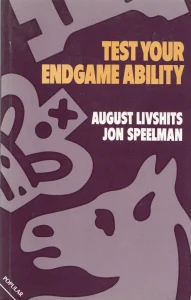
Do you often feel lost in complex endgames, are you struggling to find a decent plan in them? In that case, you haven’t read this book yet.
This book will help you think schematically in these complex, non-theoretical endgames. Figuring out a plan, which very often consists of several phases (like it was masterfully explained in Rubinstein – Alekhine game), will hopefully be much easier for the reader after consuming this book.
Some of the principles, like “do not hurry’’, were put in my subconscious after the first reading. It is a principle that occurs very often throughout this book, even though only one is named after it.
One more thing about this book I love so much is that it is not heavily packed with long, exhausting variations. The focus is put on explaining the moves, plans in given positions. Since the version I have read is from 1985, I noticed several mistakes in certain lines, but that did not bother me that much, since the focus should be on plans, as said above. After all, this book is not called ‘’Calculation in the endgame’’.
As a chess player with (sometimes) extreme bias towards knights, I found the chapter ‘’Two bishops’’ very helpful. The only bad thing about it is a lack of examples when the bishop pair proves ineffective.
Quality of Annotations
Annotations in this book are filled with great explanations, without never-ending lines after which the reader would forget what is the point of the book. However, one to two diagrams per each example are making it difficult for the readers who did not practice visualization.
Difficulty
I believe this book is meant for a broad range of chess players, from beginners to seasoned players. Beginners/intermediate players will find this book useful because it will introduce them to new endgames principles, while more experienced players might find small nuggets of wisdom which will give them epiphany.
Conclusion
I would like to conclude this review with the following: Whatever your chess level might be, get this book immediately, you will not regret it. I have read it in various phases of my chess life (first time I read it I was a beginner). It will broaden your chess understanding, and I will go this far to say that it will improve your play beyond the endgame.