Introduction
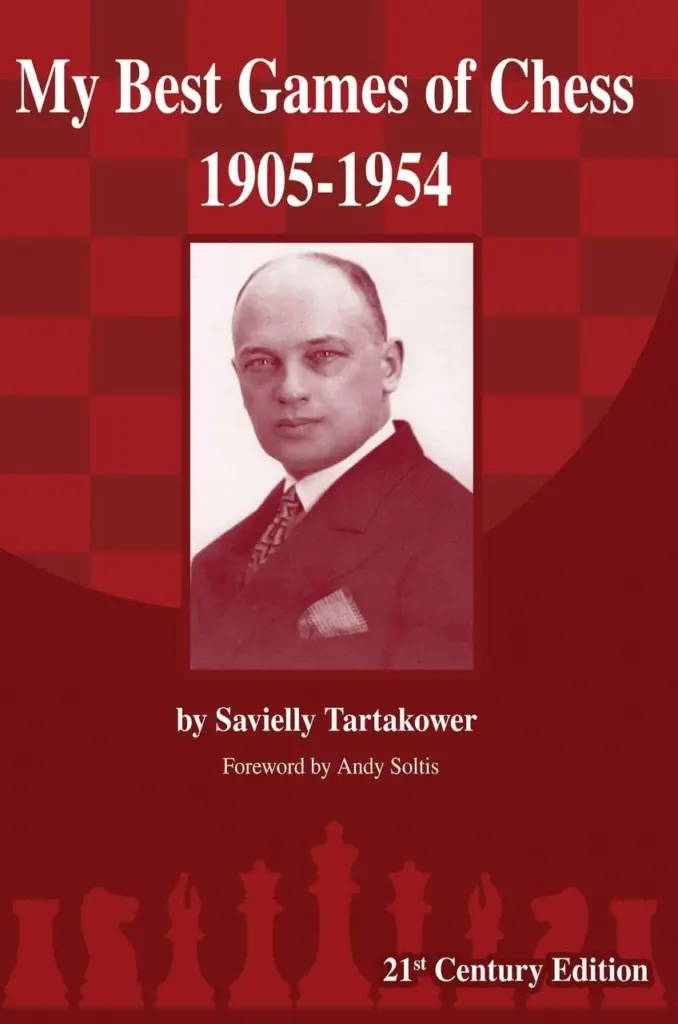
I have never learned more about a player in one book. I must confess that my knowledge of Tartakower’s life and career was very limited before reading his game collection. I had always considered him to be an outsider – a player who was good enough to have his games featured in books, but not quite good enough to be among the elite. I couldn’t have been more wrong. Savielly Tartakower was one of the most creative, strongest, and long-lasting grandmasters in history. Both his chess style, and his writing, are remarkably fresh, unique, and captivating.

Tartakower was a rare case of a chess genius who was also well-read, and as good as a writer if not better than many professional authors. He was witty, well-spoken, extremely well educated, and his annotations and writing style remind me of reading Jacques Le Goff, one of my favorite historians. Tartakower, just like Le Goff, who specialized in medieval Europe, had a gift for wrapping niche-specific facts into something a layman could read without having to rely on outside sources and without being bored. Tartakower wrote about chess the way Conan Doyle wrote about mystery.
His Best Games of Chess 1905-1954 is a new edition of two volumes, published in descriptive annotation in the 50s, by Russell Enterprises. All of Tartakower’s original annotations were kept. Modern opening names and ECO codes were added, as well as many additional diagrams. Other than that, the original volumes published by G. Bell & Sons, Ltd in 1953 and 1956, were kept intact.
Savielly Tartakower’s Career
Tartakower’s career, in longevity, could only be compared to that of Lasker, Tarrasch, and Blackburne. He was in the top 20 in the world for 41 years, from 1907 to 1948. He remains one of the few players who never became world champion and had every chance to. Like Korchnoi, Keres, Rubinstein, and Tarrasch, Tartakower came close. He was in the top 3 during the time of Capablanca’s reign. Had there been stricter rules for determining the challenger, a cycle like the one we have today, he would have surely participated in the candidates at the very least.
“Three players know how to play chess: Lasker, Capablanca, and Alekhine.
Three players want to know how to play chess: Bogoljubov, Nimzowich, and Vidmar.
Three players try to understand chess: Rubinstein, Grunfeld, and Reti.
Three players try to refute the idea of chess: Marshall, Spielmann, and Tartakower.” – Soltis mentions a quote by Tartakower in the Foreword
If you check databases, you will find over 2000 official tournament and match games played by Tartakower. That number greatly exceeds that of his contemporaries, especially considering his career, spanning from 1905 to the early 50s, had been interrupted by two world wars, both of which Tartakower actively participated in.
Tartakower had white against Milan Vidmar at the 1st Trebitsch Memorial played in Vienna in 1907. This is the position on move 22 for Vidmar. He blundered with Rg4??, blundering his knight to 23.Qxe5!, the final move of the game. Evaluate the position before his blunder. Who’s better and why?
On Chessmind you can solve positional problems and get instant feedback like you would from a real coach, you can learn from numerous opening courses, practice tactics adapted to your strength, and get access to ChessGPT! Try it out!
Harry Golombek, a chess player and a friend of Tartakower, who wrote the forewords to the first editions of the two volumes of Tartakower’s games published in the 50s, wrote: “It might perhaps surprise those who do not know him that at the age of 53 the learned doctor was actively engaged in the battle against Hitler and that, having been decorated for gallantry in the First World War whilst fighting for Austria, he should now have been just as hotly and bravely engaged on what might be termed the other side. Nothing will ever deter him from embarking ona course that he thinks to be his duty.”
Along with being among the chess elite for decades, Tartakower was also a prolific writer. He wrote several books, including the famous 500 Master Games of Chess, and thousands of articles. In the introduction to the new, 2015 edition, the editors give a full list of magazines and other publications Tartakower was writing for. They include almost every major European chess publication, as well as a dozen lesser known ones, and a few published in South America.
On his own career, Tartakower wrote: “In my long chess career, I can distinguish, grosso modo (meaning approximately; Tartakower’s annotations are full of the use of Latin. They are translated in the new edition), two main periods: The First Period, which extends from 1905 to 1930 inclusive, the year when I attained the peak of my external success …The Second Period of my chess career, from 1931 onwards, and one that will constitute the subject matter of the second volume (volume 2 published in 1956, a few months after his death).”
I have seen dozens of Tartakower games over the years of reading chess books and studying. In my mind, he was the “crazy”, unconventional guy who played the Be2 King’s Gambit and the Orangutan (1.b4) during New York 1924, and who had no opening repertoire, who only knew how to attack and swindle his way out of bad positions, Jobava might come closest to him in today’s term (in my distorted perception).
Having read the book, and having gone through his 201 annotated games, I can say that I couldn’t have been more wrong. Once you start reading a lot you quickly find out how little you know, and how most of your deductions and connections about your field of study were incorrect. That happens to me after every new chess book I read, especially biographies and tournament books, but I cannot remember ever learning more from a single volume.
Learning about just how important Tartakower was for the development of chess, how he pioneered many openings, structures, and modes of approaching preparation, chess psychology, and other aspects of the game, was instructive and captivating.
Tartakower’s Famous Sayings
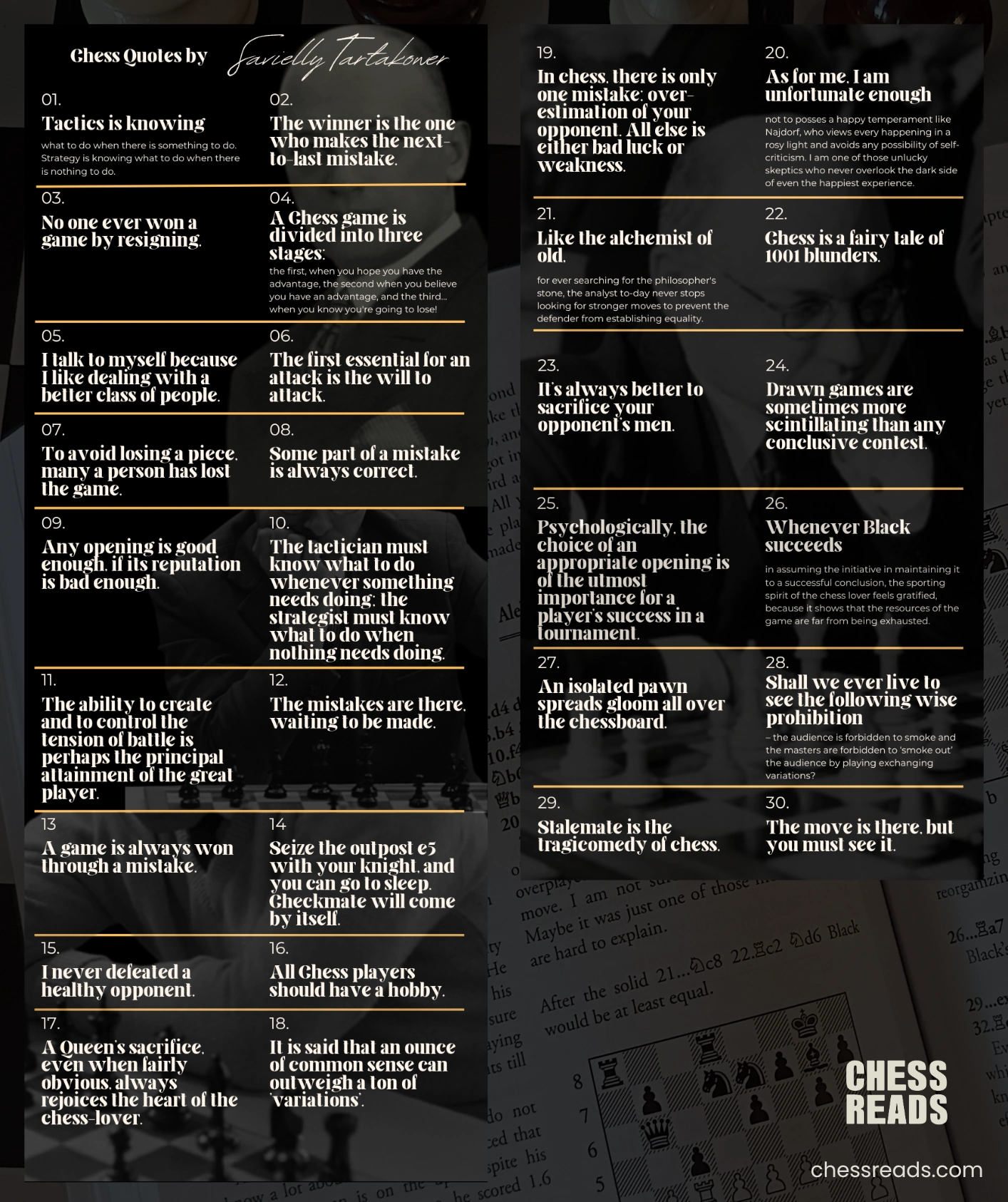
Tartakower wrote books and chess articles for over 30 magazines. He also wrote poetry. Andy Soltis, in the foreword mentions him sometimes using his artistic name “Rewokatrat” (his name spelled backwards) as well. He is probably best known for his chess quotes. I’ve tried to compile a list of every Tartakower saying I could find. After finishing the book I could add a hundred new ones from his annotations, but I will wait for greater authorities to add to the collection.
Tartakower’s Annotations
Tartakower writes as well as Tolkien, Agatha Christie, or any other famous author. Had he not played chess and written (mostly) about chess, he could have made a career as an author himself.
Take, for example, the introduction to game 32 (page 91), in which he had white against Reti in 1919 in Vienna and played 1.b4, the Orangutan: “This move, which has so bizarre an aspect, occupies a place of honor among the “freak” openings. Later, at the New York 1924 tournament, I termed this the “Orangoutang” Opening, not only because I employed it there against Maroczy after a previous consultation with a young orangutan (during a visit by all the masters to the New York Zoo on the eve of the game in question), but also since the climbing movement b4-b5 is reminiscent of that inventive animal. The name has stuck.”
His annotations for “normal positions” and moves are better written than those in most other books. He gives an evaluation, but wraps it into well-written, human language. In the notes on game 104 (pages 265-266), in which he faced the famous Sultan Khan in 1931, he writes (after move 22.Bb1): “It will be observed that white’s last four moves were made on the first two ranks, which demonstrates the passive nature of his position. The crisis is imminent.” And then , following black’s exchange sacrifice with 22…Rxe3, he adds: “An exchange sacrifice with a positional basis since its results are only gradually apparent. However, since he also gets two pans at once, black does not risk overmuch.”
The annotations are very detailed, instructive, and entertaining. Compared to most other books of the mid 20th century, the tone isn’t dry. That’s what I enjoy the most. Tartakower explains chess well, and in a very simple way. That is a mark of someone who understands the topic they are writing about – complex explanations are a sign of a lack of understanding in my experience. I think anyone above beginner level wouldn’t struggle to follow his analysis.
I haven’t done a proper statistical analysis, and I could be imagining it, but I think the first half of the book is annotated in more detail. That could be because the first volume of the original two books from the 50s was written in more detail. Since all of Tartakower’s notes were kept, that’s a logical conclusion. The first volume covered games 1-101, and here it’s covered from pages 23-260 (237 pages for 101 games). The second volume covered games 102-201, and in the new edition it’s covered from pages 261-431 (170 pages for 99 games). So there isn’t a significant difference, but the first part definitely felt as if it were written with more care.
Conclusion
This is a remarkable game collection. Tartakower has annotated 201 of his best games, as well as dozens of game fragments. His annotations are perhaps the best written out of all the chess books I’ve read. They are witty, instructive, and detailed. You will get to know Tartakower as a player, and as a very interesting human being who should have a film made about him. If you have to choose only one game collection you will read and study in your entire life, choose this one.
Game Collections as good as Tartakower’s Best Games
- ELO: 1600
- -
- 1800
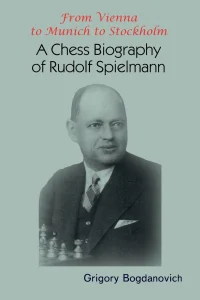
- From Vienna to Munich to Stockholm: A Chess Biography of Rudolf Spielmann
- Grigory Bogdanovich
- ELO: 1800
- -
- 2000
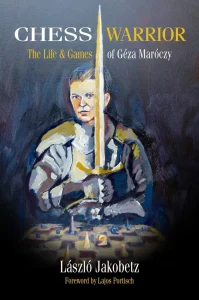
- Chess Warrior, The Life & Games of Géza Maróczy
- László Jakobetz
- ELO: 1800
- -
- 2000
- Learn from the Legends, Chess Champions at their Best
- Mihail Marin