Introduction
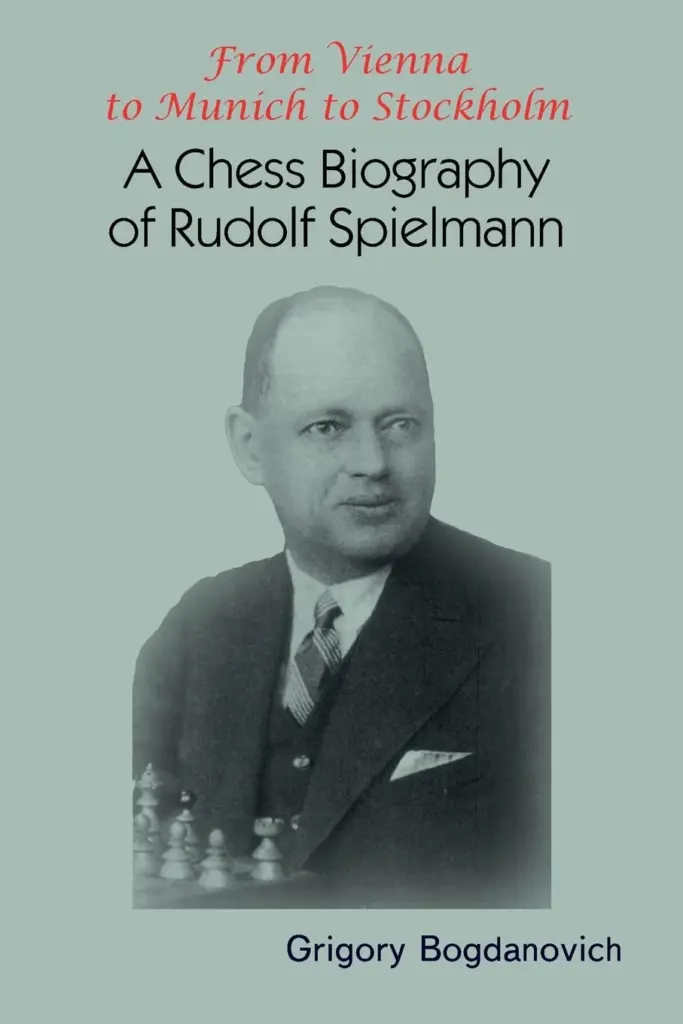
Rudolf Spielmann was a great chess player. Usually that doesn’t need to be said for anyone who has had a book written about them, but, in his case, I must make an exception. Having gone through his biography and dozens of his games, I fell in love with his playing style, his bravery, and his remarkable ability to calculate and execute forcing plans. He stands shoulder to shoulder with Bronstein, Tartakower and Tal, the three most famous attackers in their respective generations.
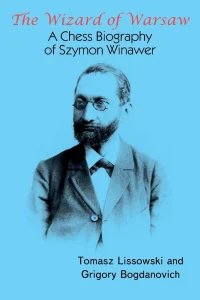
Bogdanovich’s collection of Spielmann’s is well written, as was the case with his work on Winawer. It features 213 annotated games played by Spielmann from 1905 to 1923.
Unlike some other collections, this one leans heavily towards chess, and it doesn’t focus on Spielmann’s biography and life, although they are depicted in the introductory chapter and throughout the rest of the book.
In over 450 pages, Bogdanovich has managed to present Spielmann’s genius in a very instructive manner, making the book very useful for chess learners, and not just those interested in history.
This is game 8 from the Mieses – Spielmann (1910) match played in Germany. Spielmann has white and it’s white to play on move 18. How would you evaluate this dynamic position?
Wanna solve more positional problems and get instant feedback just like you would during a lesson with a real chess coach? Continue training!
About the Author
Grigory Bogdanovich was born in 1949. He is an International Master. He was awarded the USSR Master of Sport title in 1983 after successful results in the Moscow team championship, during which he faced many famous opponents such as David Bronstein and Artur Yusupov. He has also written The Wizard of Warsaw: A Chess Biography of Szymon Winawer, and a two-volume book on Bogoljubov, titled The Creative Power of Bogoljubov.
Structure of the Book
The Chess Biography of Rudolf Spielmann is divided into thirteen chapters with annotated games, an introductory chapter that covers Spielmann’s life and career, and several appendices. The most interesting appendix is an article written by Spielmann himself, titled From the sickbed of the King’s Gambit, first published in 1923 in German (Vom Krankenlager des Konigsgambits).
The article is devoted to the King’s Gambit and it covers Spielmann’s games played in the opening. He was known as an attacking player, and employed 2.f4 often. He concludes the article by saying “No one can accuse me of bias, because I have been fighting and suffering for the King’s Gambit for 20 years. I am very sorry that the heroic era of Morphy cannot be brought back. Our task as a maestro, nevertheless, is to advocate progress without false sentimentality, and if this essay moves us one iota along this path, then I will consider my task accomplished.”
The 13 chapters that cover Spielmann’s games are structured like a middlegame book. The first one covers Spielmann’s attacks, with subchapters such as “The role of an isolated pawn in the attack”, or “Attack with same-sides castling”. I found this type of division very useful, and more instructive than a mere chronological sequence of games. The rest of the chapters are devoted to (in order) defensive skills, positional play, opening play, and endgame play, with several shorter chapters on style, entertainment level in games, and more specific features of Spielmann’s play and chess personality.
Not all the games are complete, which is a good thing. The author focuses on key positions and starts the annotations not on move 1, but wherever the game reaches a critical point.
The first chapter covers Spielmann’s life very briefly. Compared to Chess Warrior, The Life & Games of Géza Maróczy, for example, there is far less information and value in the historical part of the book.
Quality of Annotations
The most interesting thing about the annotations is that they feature notes by Spielmann himself as well as other great players of his era. Bogdanovich has included Spielmann’s own analysis whenever possible, which adds value to the book. He has also included notes by Alekhine, Nimzowitsch, Blumenfeld, Bogoljubov, Bondarevsky, Grigoriev, Romanovsky, Reti, Tartakower, and Korchnoi. It’s not specified where they are from, but I suspect they came from articles and books by the aforementioned players. Some games feature heavy annotations by one of the players, for example, Game 121, Spielmann-Colle from Carlsbad 1929, for which most of the annotations were written by Nimzowitsch, who has of course, written a book about the tournament.
Annotations by other players are a great addition. In my opinion, they make the book much more interesting and instructive. Between the author’s own text, and the added notes, the games are annotated very richly, both in quality and quantity.
The level of detail in the explanations of moves and ideas makes this a very easy read. I think most experienced players won’t need a board at all to follow the analysis.
Conclusion
This is a wonderful game collection on a great attacking genius who came close to becoming the world champion. Had it not been for Alekhine’s reluctance or cowardice to meet him in a match, he might have won the title. Bogdanovich has divided the 213 annotated games by chess themes, not chronologically, which makes the book almost as valuable as workbooks in a sense. If you read and analyze all the games, you will surely become a better attacker, a better calculator, and a better chess player!
Other Game Collections You Might Like
- ELO: 1800
- -
- 2000
- American Dream: The Best Games of Hikaru Nakamura
- Cyrus Lakdawala