Introduction
My whole life I ran across “For Dummies” books, but I have never read one, as I had time and willpower to find needed information in a material that I thought was more concentrated on the subject. Now, as I am old and more of a “dummy”, and I found time to start learning chess, I have decided to give “Chess for Dummies” a try. I have several failed attempts of learning chess online in my past, as my attention span for something that is not mandatory is not that big (I wonder off to youtube shorts easily when searching for a term that came to my mind), so now I have decided to try reading a book, and I wanted an easy and simple one to start with.
Book structure
The book consists of 6 parts, Laying the Groundwork for Champion Chess, Gaining Chess Know-How, Game Time: Putting Your Chess Foot Forward, Getting into Advanced Action, The Part of Tens and Appendixes.
I concentrated on the first three parts of the book, as I know nothing about chess, except how to move figurines (this is questionable too…).
In the first part you will learn about the board itself, how to orient it, how to place pieces and pawns (something I learned from the book, poor pawns are not called pieces), and how each of the pieces move. Then you learn elements of chess, and basics of the game, ending it all with the explanation of chess notation.
This is a known king and pawn idea, seen in Chess for Dummies and in many other beginner’s books. How would you evaluate it? Can white win or is it a draw?
The second part explains tactics, sacrifices, pattern recognition, pawn formations and mating patterns.
The third part of the book covers most used openings, how and what to do when you get to the middlegame, and “Exiting with Style in the Endgame”.
Readability, usefulness, notation
As this is my first chess book, I can’t say much of notation, I can only say that the book started lightly with describing every move textually, and gradually started introducing moves notation, and it was not hard to follow it.
Regarding readability in a scientific book way, it is very readable. The author did not overcomplicate anything, and he also did not oversimplify. I managed to go through the whole book without the need for a board, as every move was explained in detail.
Now, for usefulness, this could be a thing for a debate. While I was reading a book, I stopped for a second, and wondered: one question to ChatGPT about learning chess will give me an answer and I will read it in a matter of seconds, and I will spend a lot more time than a second reading this book… Am I being silly? Or not? Then I remembered my attention span issues, and that I asked AI many many questions, and I remember the answer for none of them, but after reading this book, I still remember something from it.
Conclusion
This book was first published in 1996 when internet access was very limited to most people around the world, and then this book was pure gold for very beginners. Now, when everyone has the whole world’s knowledge in his pocket, reading this book might be a waste of time, as all that this book covers is available in just a few clicks. But if you are like me, and start doom scrolling easily, this book might be the one for you.
Other books for beginners:
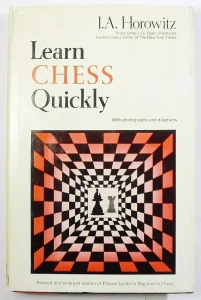
- ELO: 800
- -
- 1000

- How To Beat Anyone At Chess: The Best Chess Tips, Moves, and Tactics to Checkmate
- Ethan Moore