ELO: 2000–2200+
0 reviews
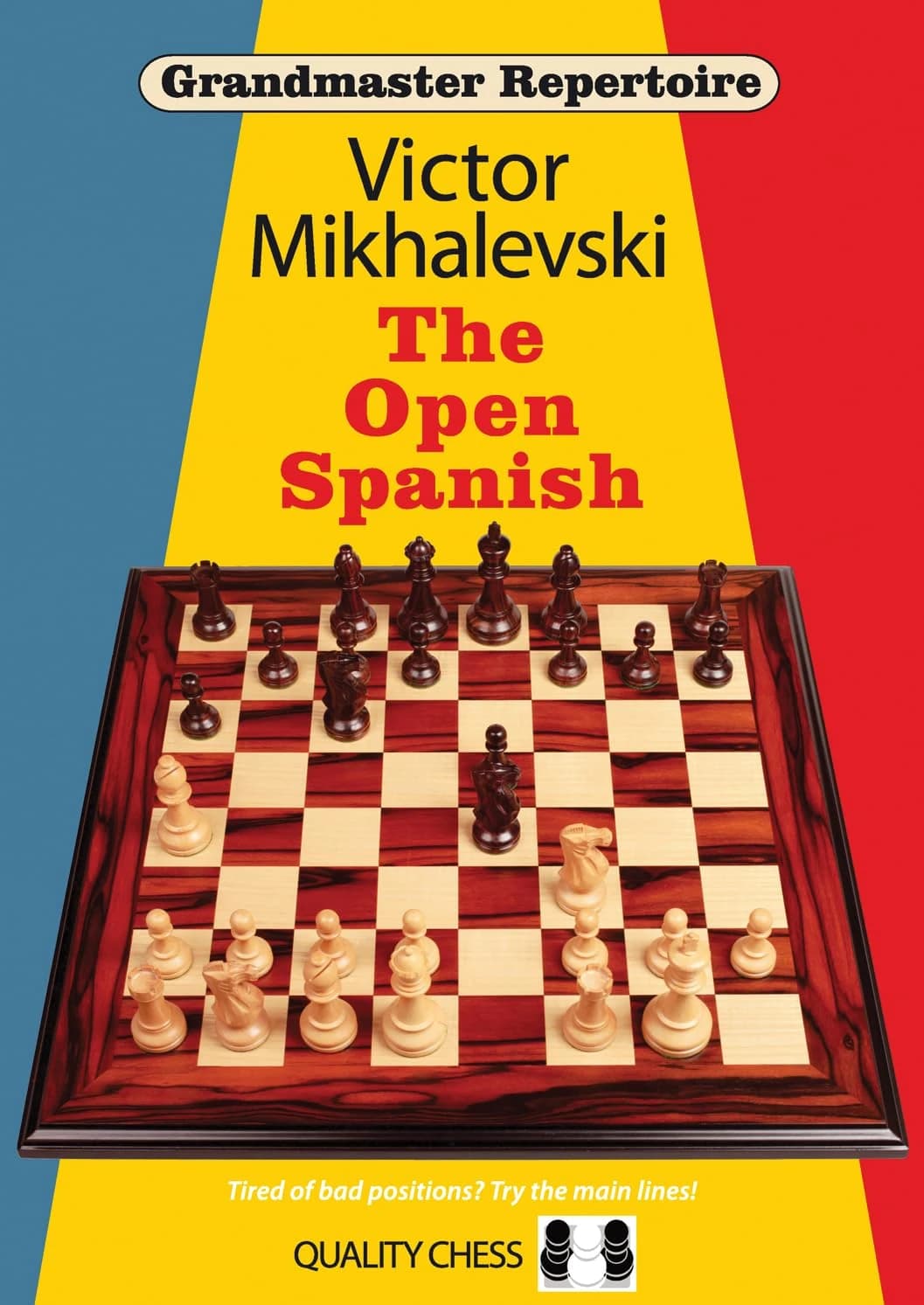
Grandmaster Repertoire: The Open Spanish
Victor Mikhalevski

Should you read the Ruy Lopez Exchange? If you’re an 1…e5 player, and you play 3…a6, definitely. This is still the best resource out there for learning how to fight against the Exchange. If you want to build your white Spanish repertoire around Bxc6, then you have to read it. Ruy Lopez Exchange was written by FM Krzysztof Panczyk and CM Jacek Ilczuk, two Polish players. I have built my Spanish repertoire around the Exchange so I’m biased towards this book. It’s not perfect, and it doesn’t cover everything, but it’s good enough to play Bxc6 on a high level. It focuses on three main lines black can choose from in the Exchange, 5…f6, which is covered in two chapters, 5…Bg4, and 5…Qd6. It also covers deviations before move 5 and rare black responses on move 5. Ruy Lopez Exchange is not a theory-heavy manual that goes 20 moves deep into variations. It’s mainly a game collection. The games accompany each chapter and form the basis of the study material.
Review by: Stjepan Tomić
This book is still the best resource on the Exchange Spanish, despite being published 20 years ago. Ruy Lopez Exchange was written by FM Krzysztof Panczyk and CM Jacek Ilczuk, two Polish players. I have built my Spanish repertoire around the Exchange so I’m biased towards this book. It’s not perfect, and it doesn’t cover everything, but it’s good enough to play Bxc6 on a high level. It focuses on three main lines black can choose from in the Exchange, 5…f6, which is covered in two chapters, 5…Bg4, and 5…Qd6. It also covers deviations before move 5 and rare black responses on move 5.

The first two chapters cover rare lines. Some of them, like 5…Qf6, covered in the second chapter haven’t been given enough attention. Qf6 is slowly becoming one of the most popular moves. The rest of the chapters are devoted to the main line variations. We must understand that in 2005, when the book came out, engines and opening books were still in their infancy, and many new ideas were introduced into high level play that would surely urge any contemporary author to structure the material differently.
Anyone who plays the Ruy Lopez Exchange variation knows that one of the key advantages they have is a permanently superior pawn structure. In this position, all pieces have been traded. How would you evaluate the outcome?
On Chessmind you can solve positional problems and get instant feedback like you would from a real coach, you can learn from numerous opening courses, practice tactics adapted to your strength, and get access to ChessGPT! Try it out!
Ruy Lopez Exchange is not a theory-heavy manual that goes 20 moves deep into variations. It’s mainly a game collection. The games accompany each chapter and form the basis of the study material. A brief introduction is given to each variation, each main variation that is, but that’s a page or two at most. The authors rely on the reader to analyze for themselves. The games are annotated, of course. Around 10-15 games per chapter is enough annotated material to help you understand the strategy and the theory.
The book also doesn’t attempt to explain strategy beyond the very basics, such as, the asymmetrical Exchange Ruy Lopez structure that’s the key feature of all positions after 4.Bxc6. So don’t think that you will get an easy read that will explain the opening, patterns, and strategy. Ruy Lopez Exchange is a collection of annotated games you are supposed to analyze on your own.
First of all, they haven’t been checked by modern engines, of course. The book came out in 2005 so there are many evaluations that are slightly off, and you should run the analysis through an engine after you're done with a game. Secondly, most of the annotations are devoted to the first 15-20 moves. That’s understandable since this is an opening book.
Reviewing chess books on openings is always difficult because one has to assess the quality of the material and the learning potential of the book and not how easy or enjoyable the book is to read. I can say that Ruy Lopez Exchange is neither an easy nor an enjoyable read, but it is useful. The annotations are short and to the point. They are meant for advanced players who already have a more than basic understanding of strategy. For beginners, they could prove overwhelming. Most of the annotations are devoted to alternative moves and mistakes, as well as reference games. If you want my advice, to get the most out of the book, invest the time to actually analyze the game the authors reference.
Technically it’s for white, since it covers every option black could play on move 5, so it’s a complete coverage of the Exchange Spanish, but, since it doesn’t actually recommend a repertoire, but instead provides games, it’s just as useful for black. Players with black should choose one chapter, 5…f6, 5…Bg4, or 5…Qd6, and focus on that as the basis of their repertoire. The only difference is that, if white wishes to play the opening, they should study the entire book while black may only choose one portion of it.
If you’re an 1…e5 player, and you play 3…a6, definitely. This is still the best resource out there for learning how to fight against the Exchange. If you want to build your white Spanish repertoire around Bxc6, then you have to read it.
ELO: 2000–2200+
0 reviews
Victor Mikhalevski
ELO: 1600–2000
0 reviews

David Gertler
ELO: 2000–2200+
0 reviews
Dariusz Świercz
ELO: 2000–2200+
0 reviews
Dariusz Świercz
No reviews yet! Be first to
No questions yet! Be first to
ELO: 1900–2200+
0 reviews
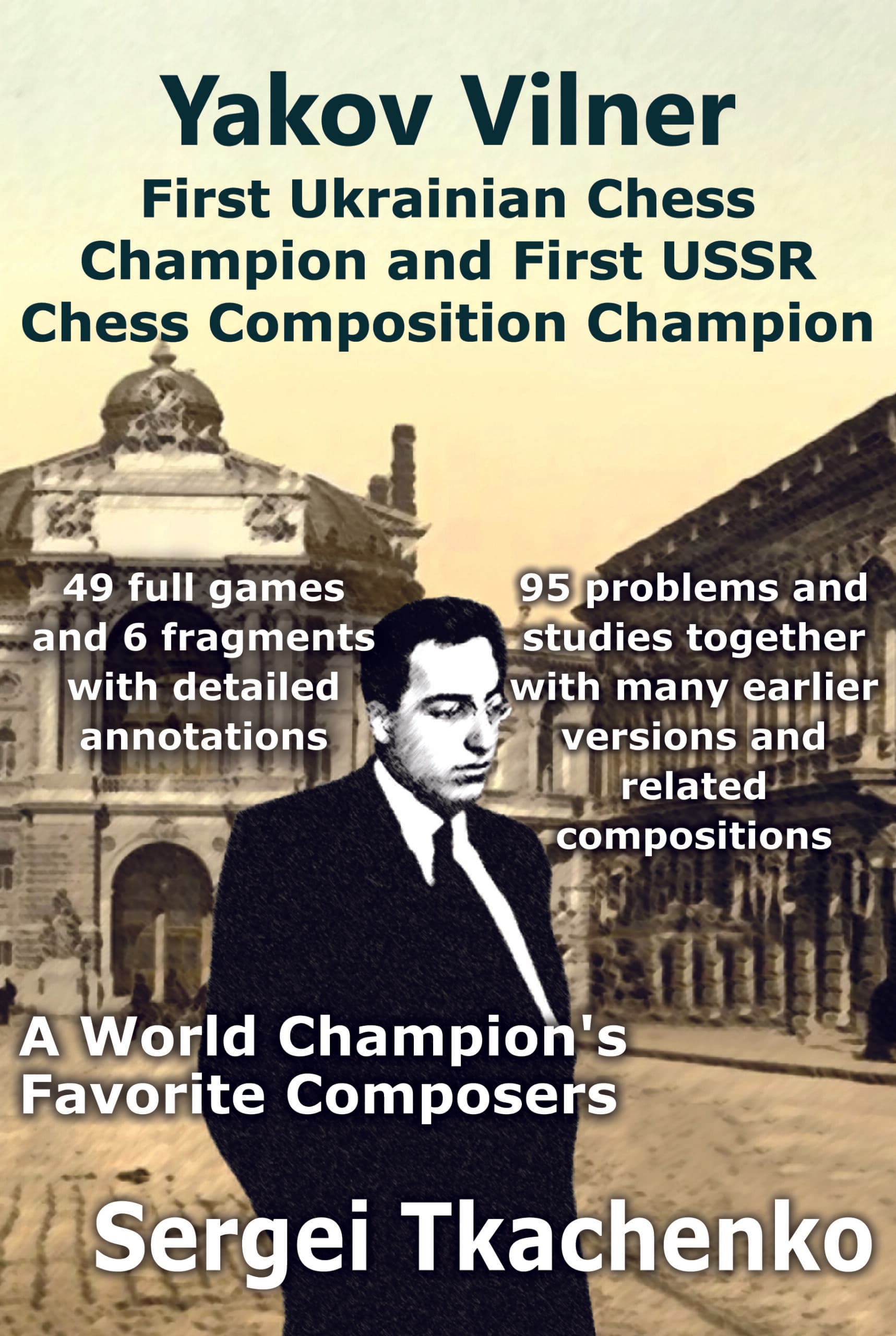
Sergei Tkachenko
ELO: 1900–2200+
0 reviews
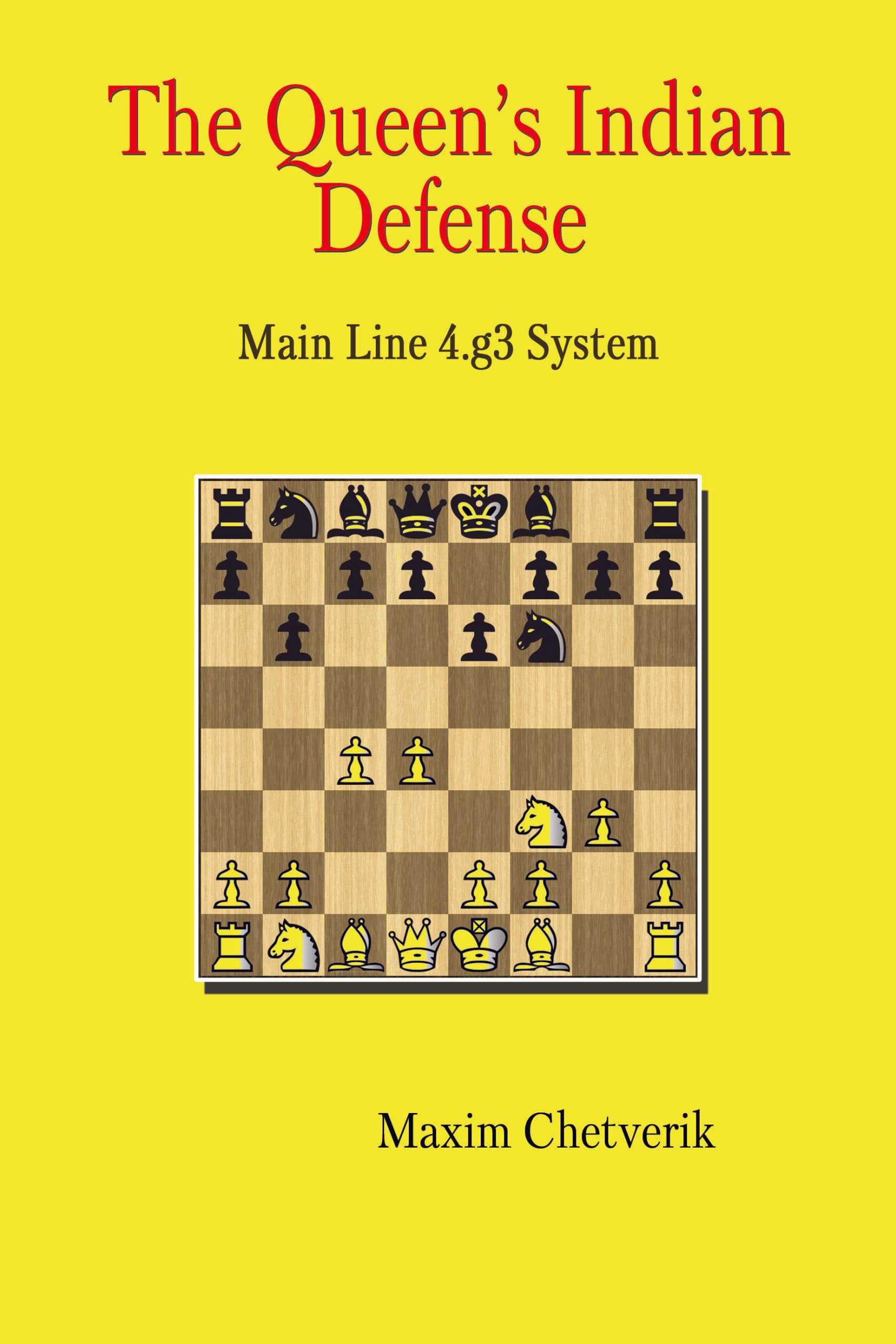
Maxim Chetverik
ELO: 1900–2200+
0 reviews
Tibor Karolyi
ELO: 1400–1900
0 reviews
Andy Mack
ELO: 1400–1900
0 reviews
Luis Scalise
ELO: 1900–2200+
0 reviews
Jakov Geller
ELO: 1900–2200+
0 reviews
Sergey Voronkov
ELO: 1900–2200+
0 reviews
Alexander Nikitin