Immortal Game
The Immortal Game was a chess game played in 1851 between Adolf Anderssen and Lionel Kieseritzky, during the London chess tournament but – it was played in a cafe, not as an official part of the tournament. It became famous after Kieseritzky published it in La Régence, a French chess journal.
A few years later, Ernst Falkbeer published his analysis of the game where he described it as immortal and rightfully so! It was and still is a fascinating and surprising game between two great rivals. It was also the game that inspired the author to do the deeper research about chess history.
This is game 19 from the World Championship match between Steinitz and Lasker played in 1894, that brought Lasker victory and made him the second world chess champion in history. It’s Lasker to play on move 28. How would you evaluate the position?
Wanna solve more positional problems and get instant feedback just like you would during a lesson with a real chess coach? Continue training!
Internal Motivation
The author, David Shenk, was first drawn to chess in high school but he got frightened, so to say, by its great influence on his life. He did get back to chess eventually even after this weird feeling caused by it.
Shenk got reacquainted with the game after learning that his great-great-grandfather was a legendary chess master in France. So he started to rediscover the game and to play again but, as he put it, was lousy at it. Trying to improve a bit as well as trying to learn more about his ancestor, led to doing some research in the library.
While doing research, the author stumbled upon the Immortal game which intrigued him and captivated him. It pushed him to ask many questions about chess, like why and how did chess survive so long or, as the full title says – how 32 carved pieces on a board illuminated our understanding of war, art, science, and the human brain.
Book Structure
The book starts at the beginning – first mentions of the game that preceded chess, how it traveled across countries and how it transfigured slowly. It is divided into three parts which are again divided into alternating chapters about chess history and The Immortal Game.
As I have never heard about the Immortal Game before, the parts writing about it were very interesting and I was anxious about what’s going to happen next. And the chapters about chess history are very well written, too.
In the end of the book, the author included a short explanation of chess rules, recap of the Immortal Game along with five other great games from history and Benjamin Franklin’s “The Morals of Chess”.
Other Great Historical Books On Chess You Might Like
- For any rating
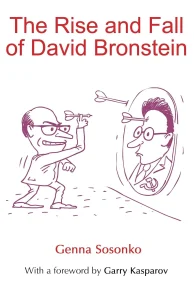
- The Rise and Fall of David Bronstein
- Genna Sosonko
- For any rating
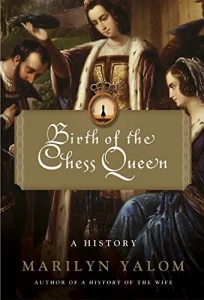
- Birth of the Chess Queen: A History
- Marilyn Yalom
- For any rating
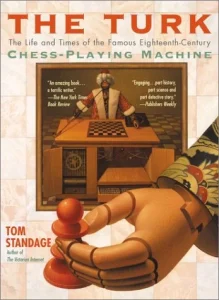
- The Turk: The Life and Times of the Famous Eighteenth-Century Chess-Playing Machine
- Tom Standage
- For any rating

- Bobby Fischer Goes to War: How the Soviets Lost the Most Extraordinary Chess Match of All Time
- David Edmonds
Conclusion
It doesn’t matter if you are new to chess or not, if you are interested in chess history, I highly recommend this book as an interesting read. It brings chess history in a different format with alternating chapters between chess history and the Immortal game analysis.
Although I have had some trouble staying focused at first, as the first few pages didn’t seem very promising to me, going further through the book it just got better and more interesting with every page.
As I was not familiar with the Immortal game before, it was very interesting to read the analysis and follow the thoughts move by move. The book kept me on edge as it alternates the chapters just when it gets very thrilling and I was more and more anxious to learn how the attacked player would defend himself in the next move (in the next chapter). The book also provides some interesting bits of chess history I’ve never heard of before.
All in all, as a person just getting reacquainted with chess (just like the author, I learned the rules and played shortly in childhood), I just couldn’t put the book down.