Growing up I read a lot of books. I think most GMs get a lot of their knowledge from coaching, which is why historically most high-level players concentrated in just a few countries: they had experienced coaches to learn from. In my case, I had to learn mostly on my own, but I found books to be extremely helpful.
Still, over time I learned to recognize that some chess books are just "not that convincing". Here's a few of the criteria I use to decide whether a book is great, or mediocre.
The Quality of The Examples Matters!
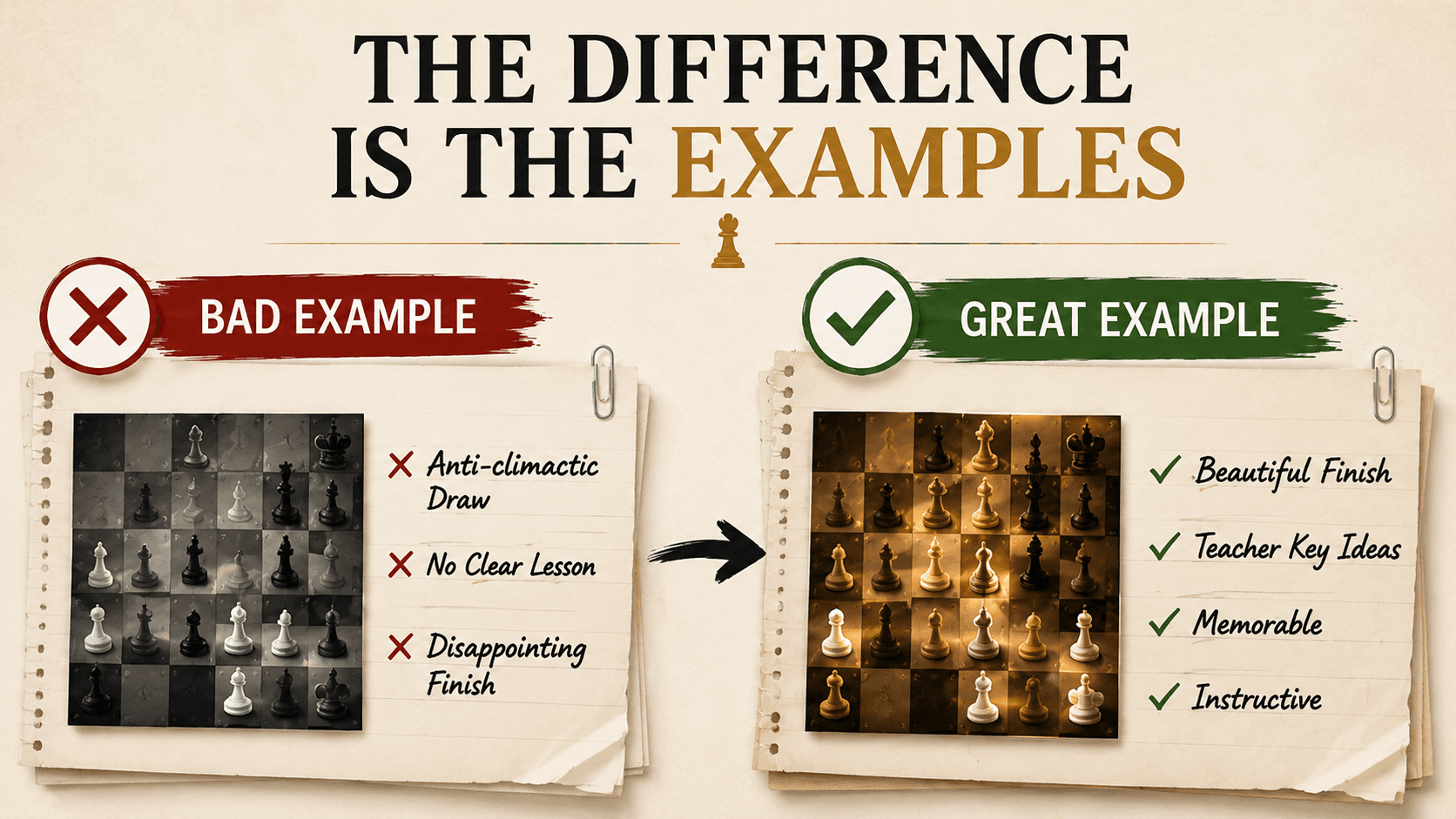
I think one of the most challenging aspects in writing is finding good examples that can truly "make your point". Like, if you want to show a good example for the minority attack on the Carlsbad, I'm sure there's 100+ games that can "do the job", but some of them will definitely illustrate the core ideas in a better way. Choosing is honestly "not that hard", what's truly difficult is finding and having the patience of going through 100 games to just pick 1-2 that are truly great.
Now, what makes a game great? Here's my personal list:
- The game is visually appealing.
- There are no silly blunders from either side
- The winning side progresses smoothly toward the win.
- The winning idea actually wins the game all the way.
Example of a Disappointing Game
To give you an example, I remember once reading a book in a training session with my college team (which included a couple other GMs in fact). White had an advantage and we were learning how to impose it. In the end, the game reached this position:
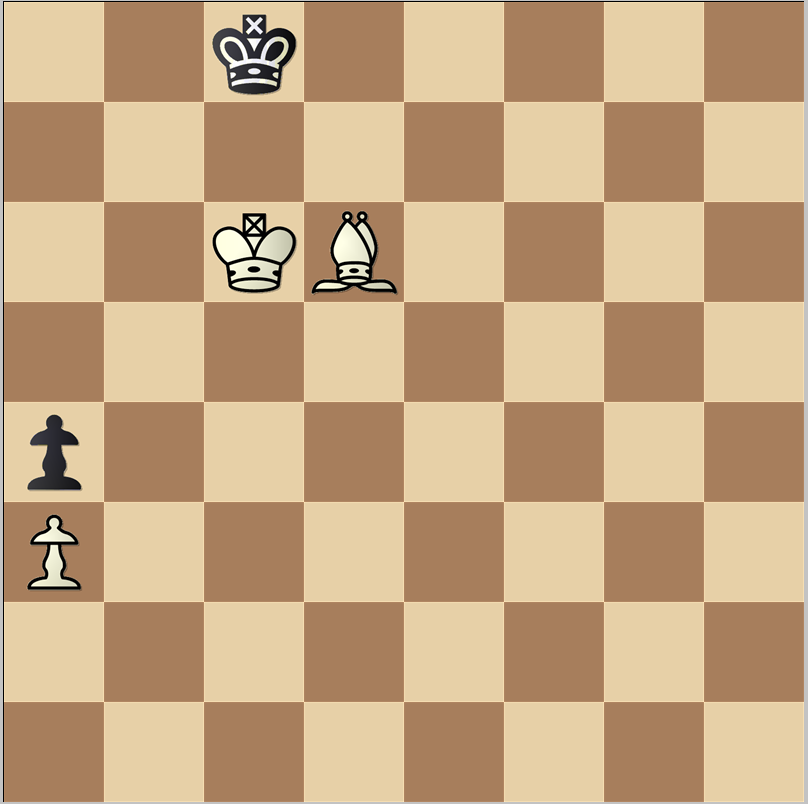
Here, the author just said something like: "White did a good job getting an extra piece, but this position is a theoretical draw" and then the book just showed another 20 moves of White making a futile attempt to win.
I remember the look of disappointment in our faces. After this example, we decided to stop reading from that book. This is exactly what I mean by a poorly chosen example. Not every game can end with a beautiful win, but if you're writing a good book, you need to spend the extra time, so your examples don't end with such an anticlimactic draw.
Example of a Great Game
When I was writing Chess Imbalances, I remember spending an insane amount of time finding games I was truly happy with, and sometimes, if the winning side made a mistake, I would even make their mistake into a sideline, and create a brand new main line to show: "this is how the game should have ended". Here's an example from the bishop pair chapter. The final position I created was:
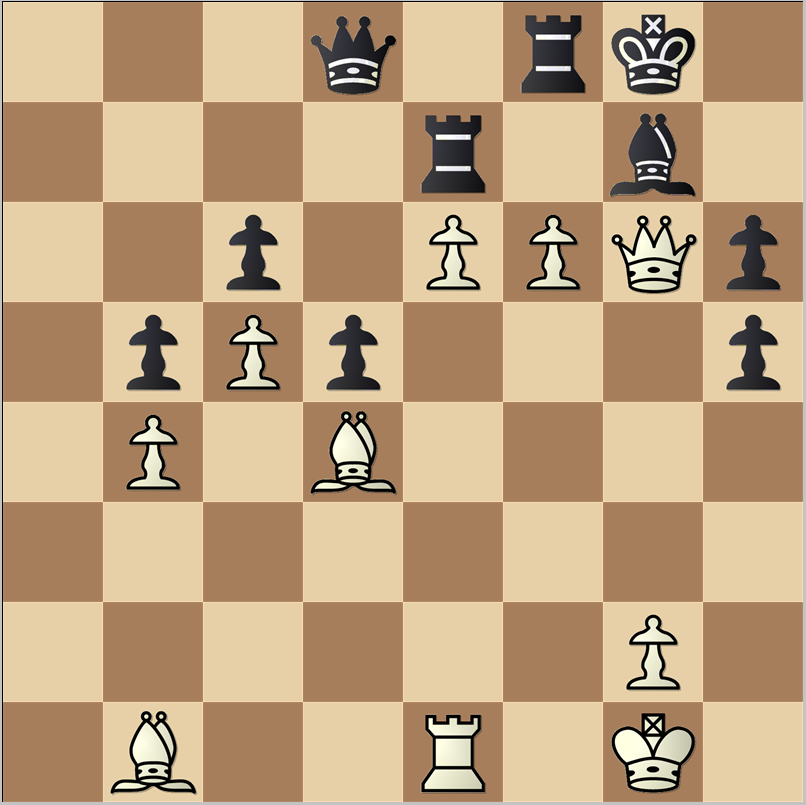
The reason I liked this position is that the final diagram itself has a lot to teach us! Few key concepts:
- We have bishops in consecutive diagonals, working together against Black's king.
- We have two connected passers, which do a great job helping each other.
- Even though Black is an exchange up, their position is entirely desperate, due to White's coordination.
Even if you didn't read the game, the diagram itself has something to teach you about the power of bishop pairs, which is exactly the topic of the chapter. That's no coincidence. My philosophy is that the game as a whole should "speak with one voice" and re-emphasize the key idea over and over.
The Message Must Be Clear!
You'll hear me say once and again that, if you can't tell me what you've learned in words, then you probably didn't learn that much. Obviously, if the book author shows you examples and explanations without an overarching message, then it's really hard for you as a reader to actually get some insight that will last.
The books I read growing growing up were a mixed bag. Most of them had some examples where the learnings were quite clear, and others where I could only build a bit of intuition and remember a tactic or two, but there wasn't a clear takeaway for me. When I write my reviews, I'll be sure to point out these flaws repeatedly. Reading books is time consuming, so I believe authors owe it to their readers to have a clear picture in their mind for what they're trying to convey.
I think one of the reasons that Chess Structures and other books with a similar philosophy have been well received is that there's a clear message at many different levels. For example:
- The point of the book as a whole is that the pawn structure dictates the right plan.
- The point of a chapter is to learn a list of correct plans for White / Black on a single structure.
- The point of a single game is to learn how 1 specific plan works well for 1 specific side (White or Black).
When you have that kind of structure, it's very easy to remember exactly:
- What you're supposed to be learning
- How the thing you're learning fits in the overall context of the book.
That's the point! Here's a diagram I truly loved from Chess Structures:
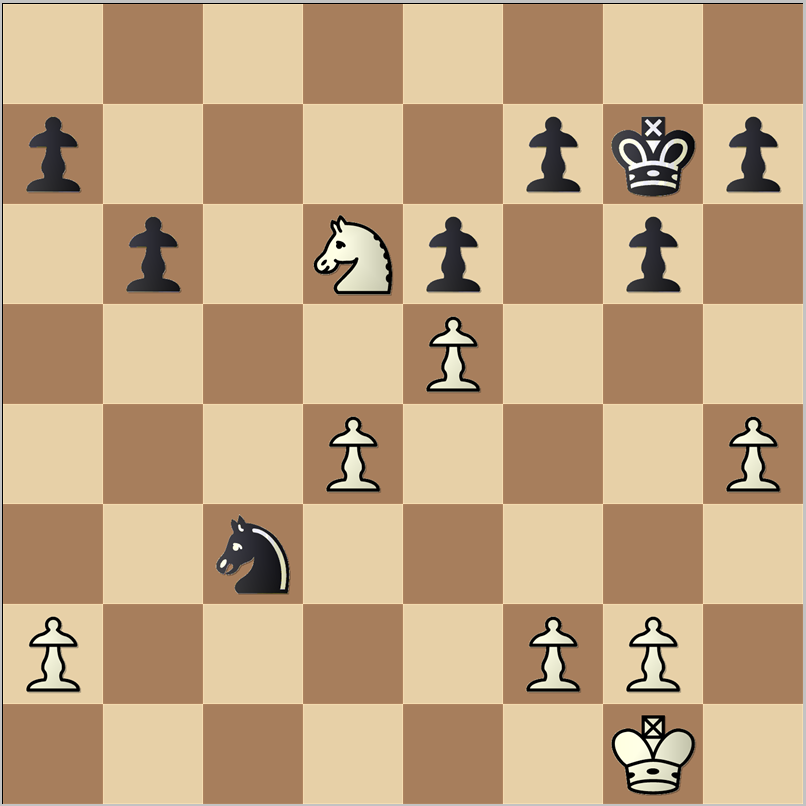
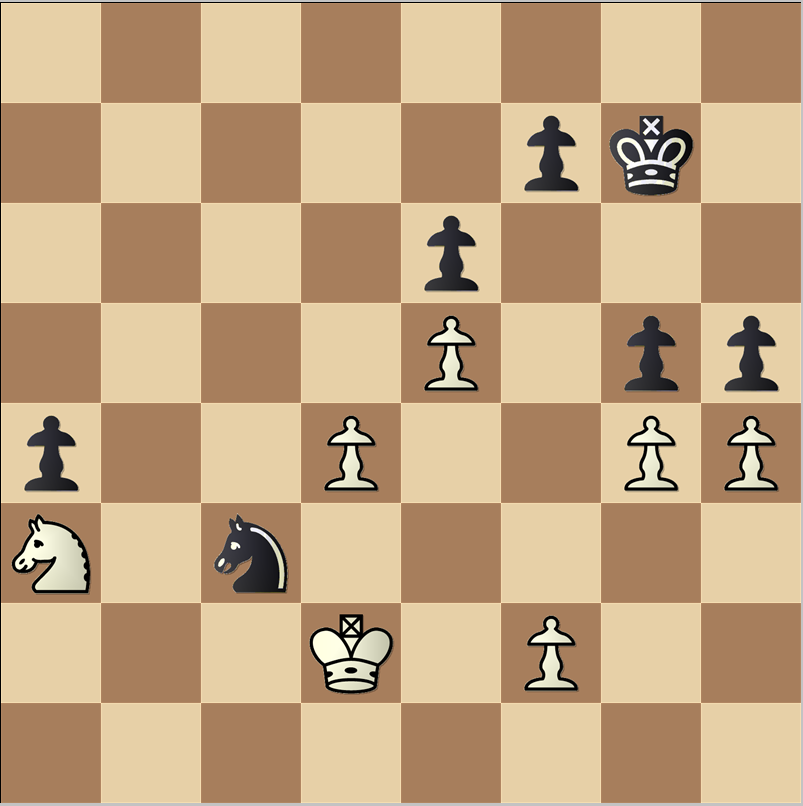
What I really loved about this position is that the whole game is an example of how White's e4-e5 push can leave White with a blocked pawn majority (i.e., the d4-pawn cannot advance), while Black's queenside majority continues to be mobile, and eventually resulted in a beautiful and very didactic win for Black, with lots of standard ideas. Here's a diagram just a few moves later, which is also quite beautiful in my opinion:
By the way, I think sometimes it's easy for middlegame books to be more disorganized than they need to be. On the other hand, I think many endgame books do a great job keeping that level of organization. For example, this book series on Basic, Essential and Typical rook endings does a great job breaking down a complex subject into very clear and distinct steps (admittedly, the book titles could have been a bit more clear ;). Nevertheless, I recently went through those books almost page by page, and recommend you check them out!
Explanations Must Hit The Right Balance
This is the most difficult aspect in my opinion, because it requires a writer to decide how much depth is appropriate, and because there are positions where you "don't really have a choice". One of the things I struggled with when writing Chess Imbalances was that some positions were basically a forced win, but I "felt guilty" just saying "this is clearly winning", when it's not obvious at all. So, from time to time, I had to write quite a few lengthy variations in order to really "prove the point" I was trying to make.
One question you might ask is: Can I learn from a book when the variations are too dense for my level?
My answer is yes! believe a good writer will do a great job separating concept from variation, and if the book you have did a good job and has enough explanations in words, then just rely on that. Something that's really interesting about chess is that players of many different levels can look at the same material and still get something very meaningful from it. You don't have to understand everything in order to learn. Just make sure the general concepts you're learning are "true", that's way more important.
Warning For Everyone!
It's true that sometimes GMs write books in a way that seems "too deep" and hard-to-follow. That can feel overwhelming. So, it can be tempting to learn from someone who's lower rated, and provide shorter and simpler explanations because they are "easier to follow". There's some truth there, but the real risk is that chess is very complex, and sometimes when you learn from someone who is below 2300-2400, their understanding of the game can be a bit limited, so you might be learning facts that are "easy to remember", but not 100% true...
My advice to you is that you learn how to skip variations you find overwhelming, while still learning from the best.